


Howard W. Simpson Era
(1910-1920)
Expanding the Campus and Preparing Students for Life
The Howard Simpson Era was one of the most transformative periods in South Dakota School for the Deaf history. As the first Child of Deaf Adults (CODA) to serve as superintendent, Simpson guided SDSD through a decade of remarkable growth, overseeing major campus expansion, strengthening vocational and agricultural education, enlarging the school farm, and leading the school through the challenges of World War I. His leadership left a lasting impact on the school's physical and educational development.
Campus Expansion and Improvements
Introduction
Howard Wright Simpson served as the sixth superintendent of the South Dakota School for the Deaf from 1910 to 1920. Born on February 7, 1882, in the Main Building on the SDSD campus, he was the eldest son of former superintendent James Simpson and Anna Laura Simpson, both of whom were Deaf. Raised in a Deaf household and fluent in sign language from childhood, Howard became the first CODA (Child of Deaf Adults) to serve as superintendent of SDSD. At just twenty-eight years of age, he was considered uniquely qualified for the position because of his lifelong connection to the school and deep understanding of Deaf education. Under his leadership, SDSD experienced significant campus expansion, growth in vocational education, enlargement of the school farm, and adaptation to national events, including World War I.
Howard Simpson oversaw one of the most active periods of campus construction and expansion in SDSD history. To accommodate increasing enrollment, the School Building and Boys' Dormitory underwent a major expansion in 1912 following a legislative appropriation.
The enlarged granite facility provided additional classrooms, offices, two basement gymnasiums, a large assembly hall and expanded vocational training areas, greatly improving the school's educational capacity.
The new School Building and Boys' Dormitory, completed in 1912, greatly expanded classroom and residential space for students.
Click image for more information.

The top floor of the Industrial (Vocational Shop) Building was converted into a temporary hospital (infirmary) to provide medical care after the former hospital building had been converted into the Girls' Dormitory.
Major campus improvements included:
Academic & Residential Building
-
Major expansion of the School Building and Boys' Dormitory (1912)
-
Expansion of French Hall (1913)
Farm & Agricultural Facilities
-
Farm enlarged by 109 acres
-
New poultry house, machine shed and coal house
-
Conversion of the farm creamery facilities
-
Construction of a modern combination barn (1918)
Campus Infrastructure
-
Modernization of the heating plant and steam distribution system
These project greatly improved the school facilities and prepared SDSD for future growth

Howard W. Simpson
Click image to read his profile
Born:
-
February 7, 1882
-
In the Main Building on campus
Died:
-
July 26, 1928,
Position:
-
6th Superintendent,
-
S.D. School for the Deaf
Years Active:
-
1910 – 1920
Background:
-
Son of James and Anna Laura Simpson.
-
Raised on the SDSD Campus
-
Graduate of Brookings College
Known For:
-
Modernizing the SDSD Campus
-
Expanding vocational and agricultural education
-
Improving student life through athletics and activities
-
Continuing the Simpson family's educational legacy
Notable Achievements:
-
Completed the 1912 School Building and Boys' Dormitory
-
Purchased 109 acres for an expanded school farm
-
Installed a modern central heating and steam system
-
Converted the former industrial Shop into a temporary hospital
Family:
-
Wife: Stella I. Rigby Simpson
-
Children: Virginia Margaret Simpson
Expansion of the School Farm and Campus
One of Howard Simpson's most significant achievements was the expansion of the school's land holdings. Believing that many SDSD pupils came from rural farming families, he envisioned enlarging the campus to create a formal agricultural education program. For several years, Simpson worked with the State Board of Charities and Corrections and the South Dakota Legislature to acquire farmland adjoining the school.
The project, however, was not without challenges. While many landowners agreed to sell, others disputed the value of their property. Negotiations eventually broke down, leading to lawsuits, in which the courts to determine fair compensation before the state could complete the purchases. Although the legal proceedings delayed the project, they ultimately cleared the way for the expansion.
In 1917, the South Dakota Legislature appropriated $35,000 to purchase approximately 109 additional acres adjoining the school farm. The expansion greatly increased the size of the SDSD campus, providing valuable space for agricultural instruction, livestock operations, and future development. It became one of the largest campus expansions in the school's history and reflected Simpson's vision of preparing Deaf students for successful lives through practical vocational and agricultural education.
Click this FARM PAGE for more information.
Vocational and Agricultural Education
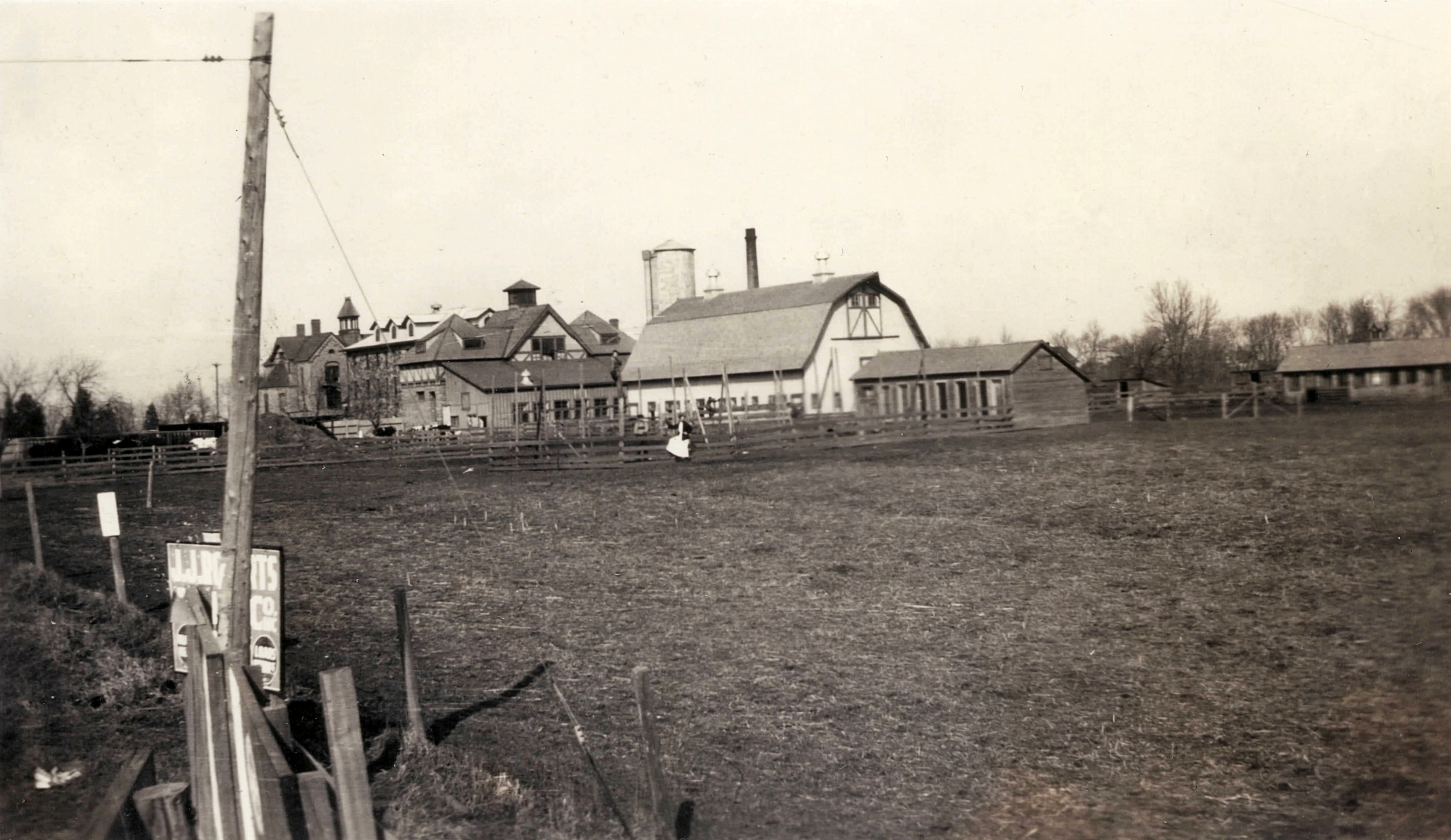
Howard Simpson expanded the campus farm by purchasing additional acreage and constructing a modern barn to support vocational agriculture.
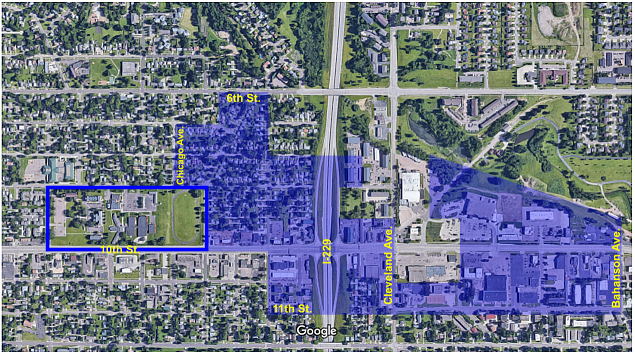
Blue highlights show the land acquired during Howard Simpson's administration, increasing the SDSD campus and farm operations.
Believing that education should prepare students for successful and independent lives beyond the classroom, Howard Simpson greatly expanded SDSD's vocational and practical training programs.
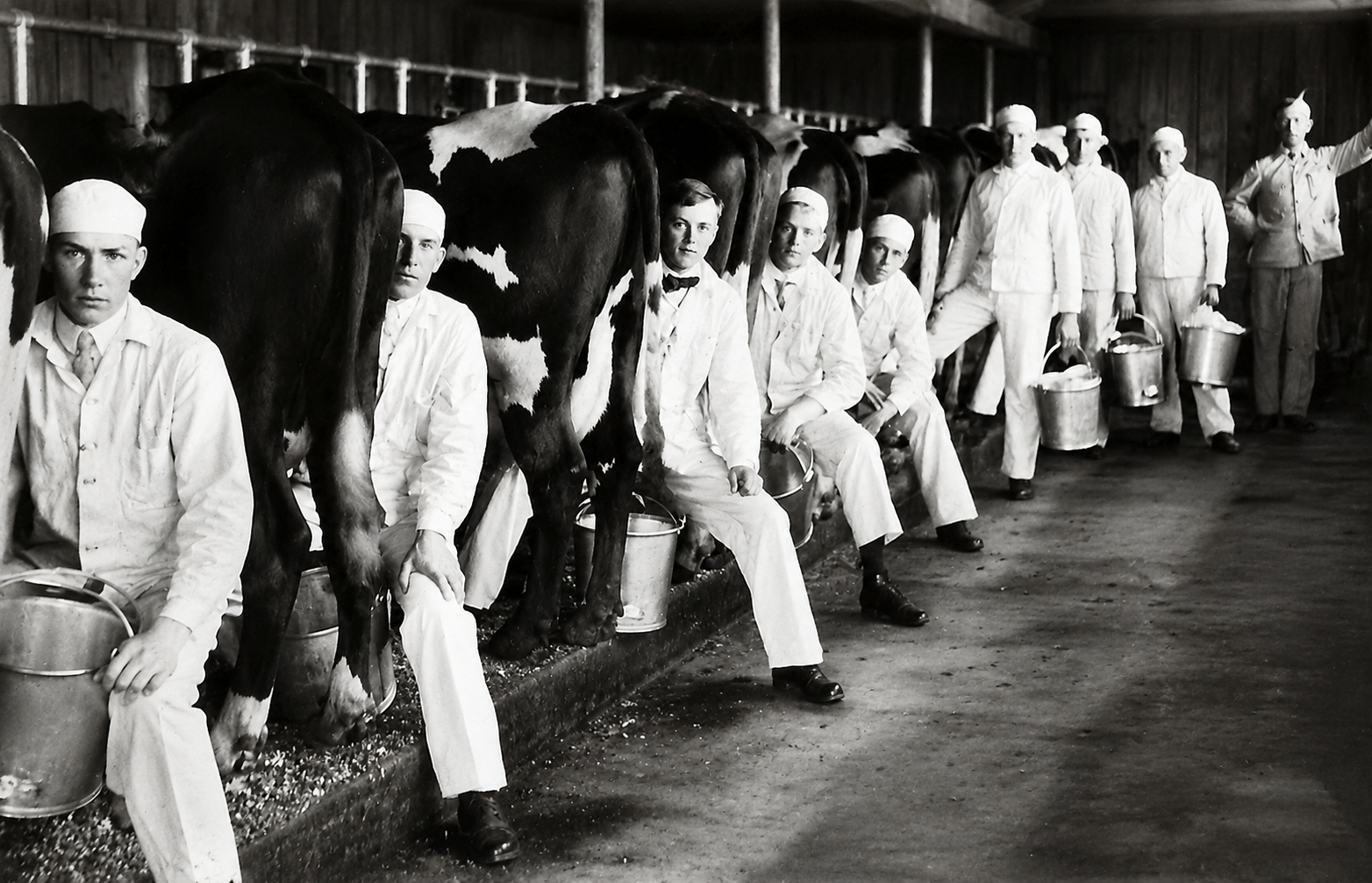
Students learned dairy farming through hands-on instruction as part of SDSD's agricultural education program.
Boys' vocational instruction included:
-
Printing
-
Shoemaking
-
Carpentry
-
Woodworking
-
Agricultural training and livestock care
Girls' vocational instruction included:
-
Sewing and dressmaking
-
Cooking
-
Housekeeping
-
Domestic science
These programs emphasized practical knowledge that students could apply in their homes, communities, or future employment. Together with the expanded school farm, they reflected Simpson's belief that Deaf students should graduate with both academic knowledge and the practical skills needed to lead productive and independent lives.
Student Life and Campus Activities
Life at SDSD extended far beyond the classroom. During Howard Simpson's administration, pupils enjoyed a wide variety of academic, athletic, social, and community activities that helped create a vibrant campus life.
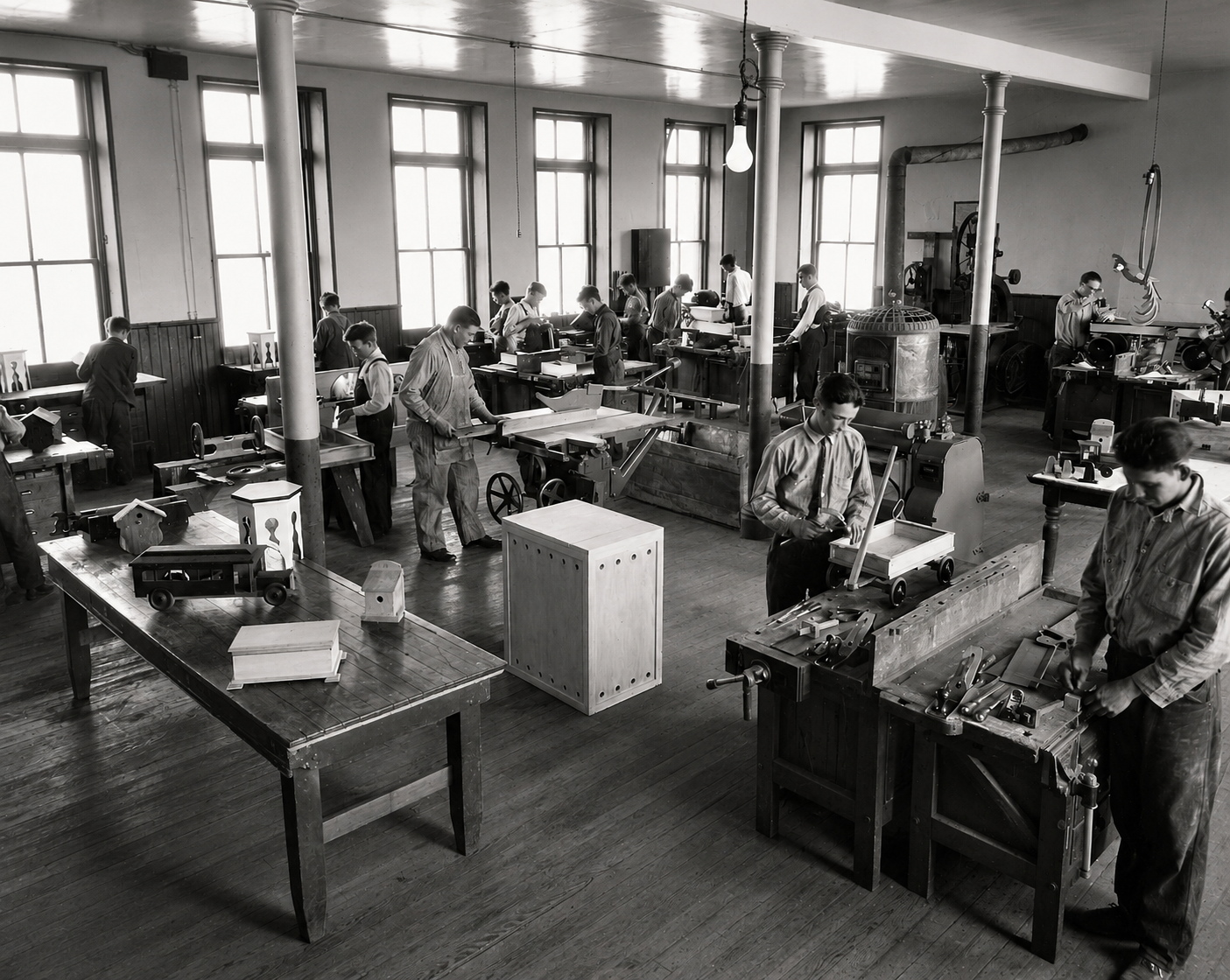
Students received practical training in woodworking, carpentry, and other vocational trades.

Girls participated in homemaking classes, learning sewing, cooking, and household management.
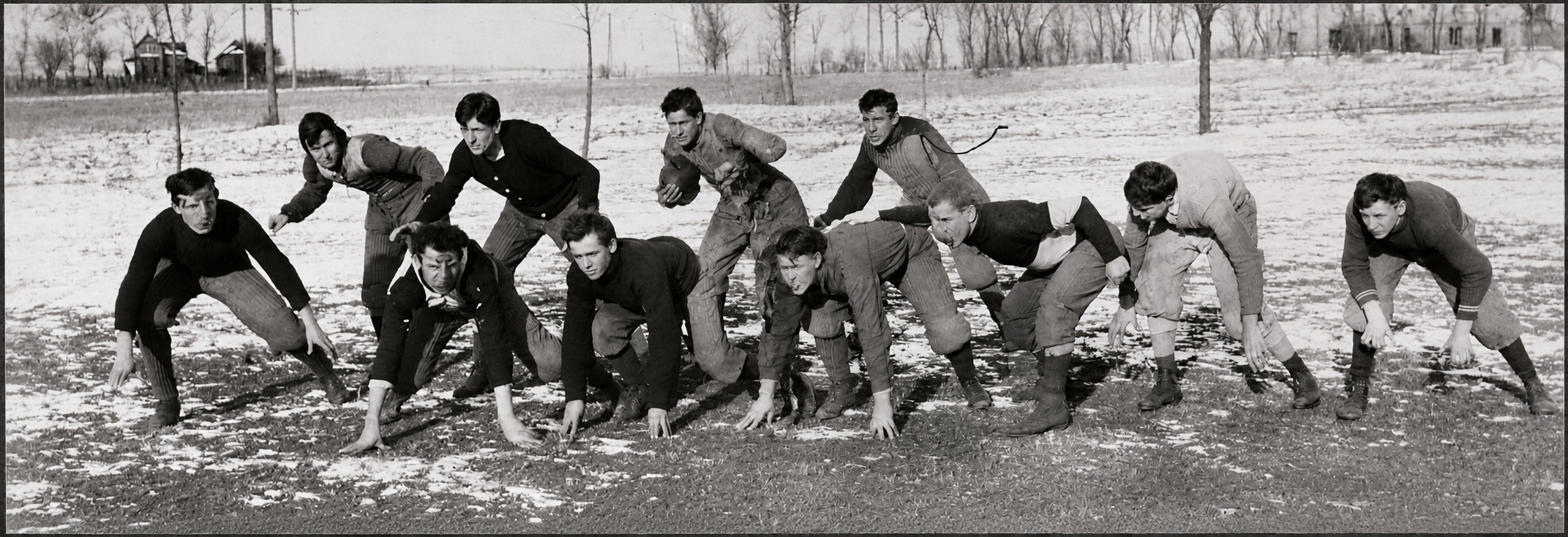
Football remained one of the school's most popular activities during Howard Simpson's administration. This team was photographed on campus with the Olde School in the background.

The boys' basketball team, 1919. Games were played in the new basement gymnasium beneath the 1912 School Building.
Athletics
-
Football
-
Boys' basketball
-
Girls' basketball
-
Baseball
Student Activities
-
Annual picnics
-
Graduation exercises
-
Holiday celebrations
-
Theatrical outings
-
School dances
-
Social gatherings
Community Engagement
-
Public exhibitions of student work
-
Visitors welcomed throughout the year
-
Demonstrations promoting deaf education
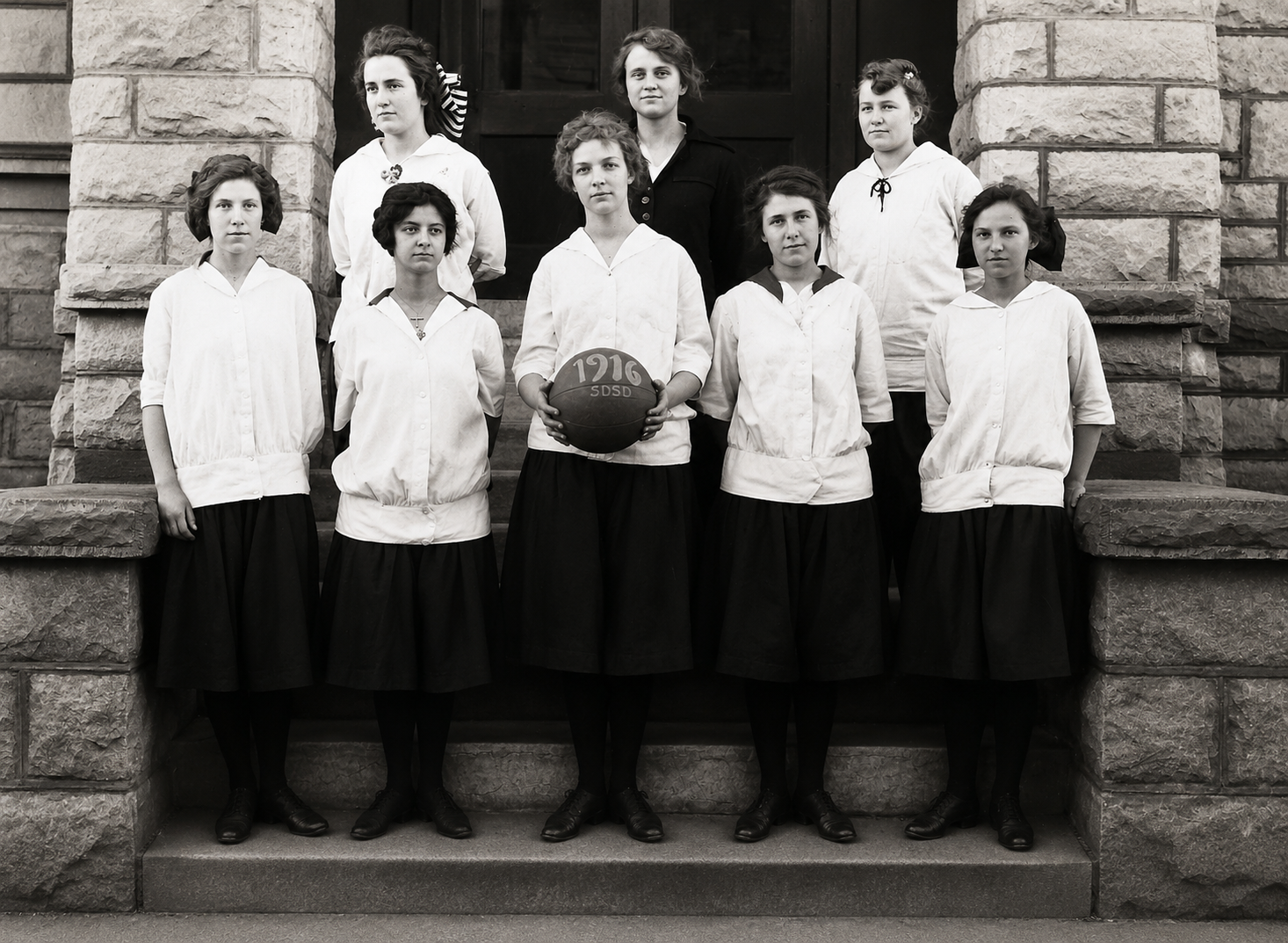
The girls' basketball team, 1915-16, photographed on campus with the Olde School in the background.
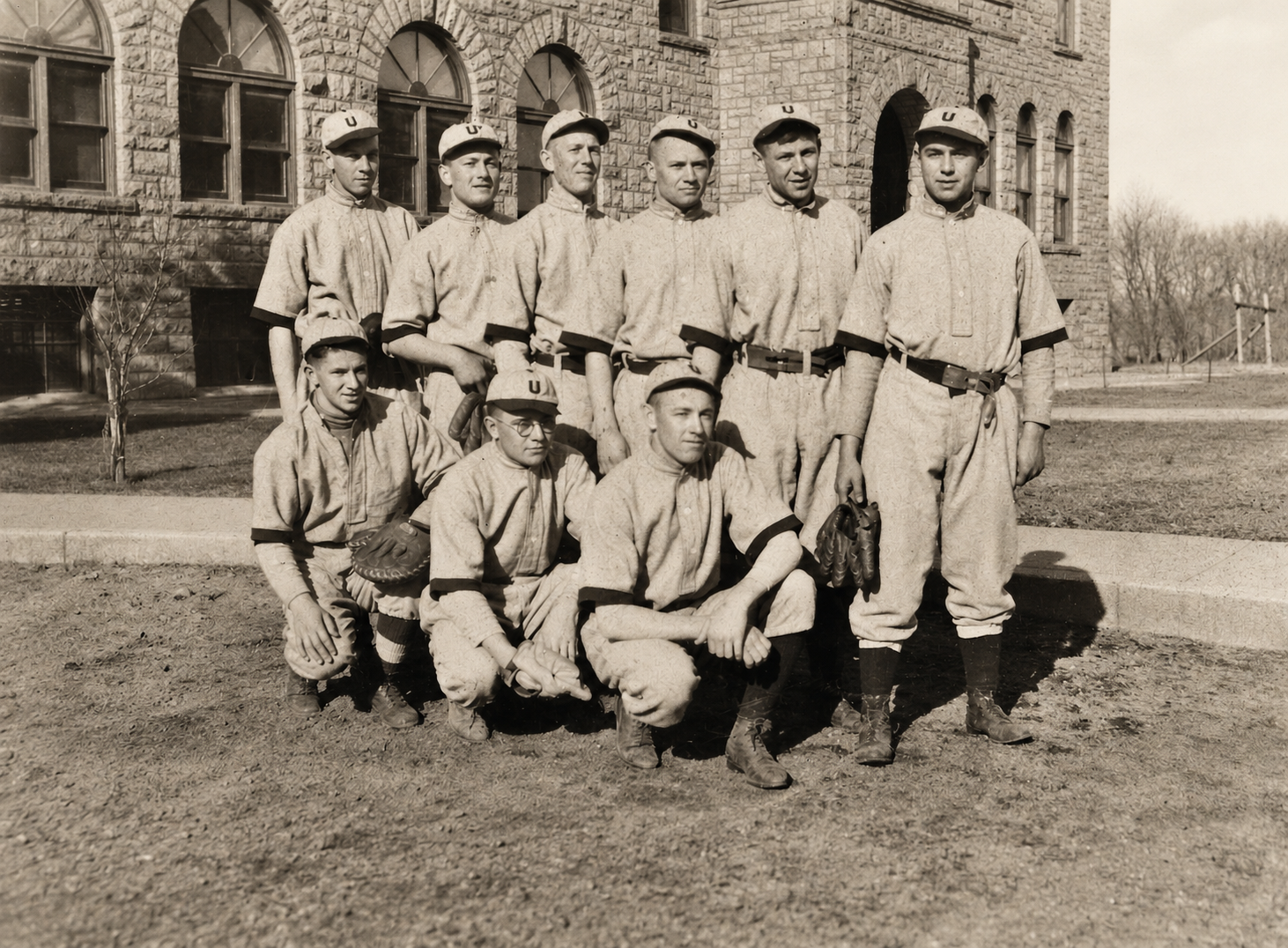
The 1919 baseball team posed in front of the newly completed School Building, a symbol of the campus expansion under Howard Simpson.
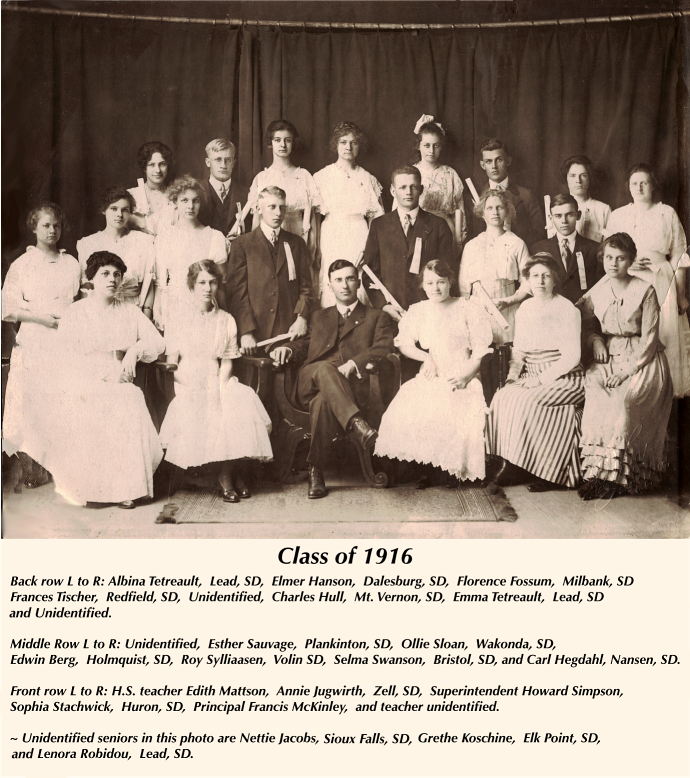
Superintendent Howard W. Simpson (front center) with the graduating class of 1916. The photograph was taken during one of the most significant periods of campus expansion and educational growth in SDSD history.
Together, these activities fostered school spirit, lifelong friendships, and a strong sense of community while helping the public gain a better understanding of Deaf education.

Students celebrated George Washington's Birthday in the new assembly hall in 1916. The spacious hall quickly became the center of campus life, hosting assemblies, performances, holiday programs, and other school events throughout the year.
World War I and Changing Enrollment
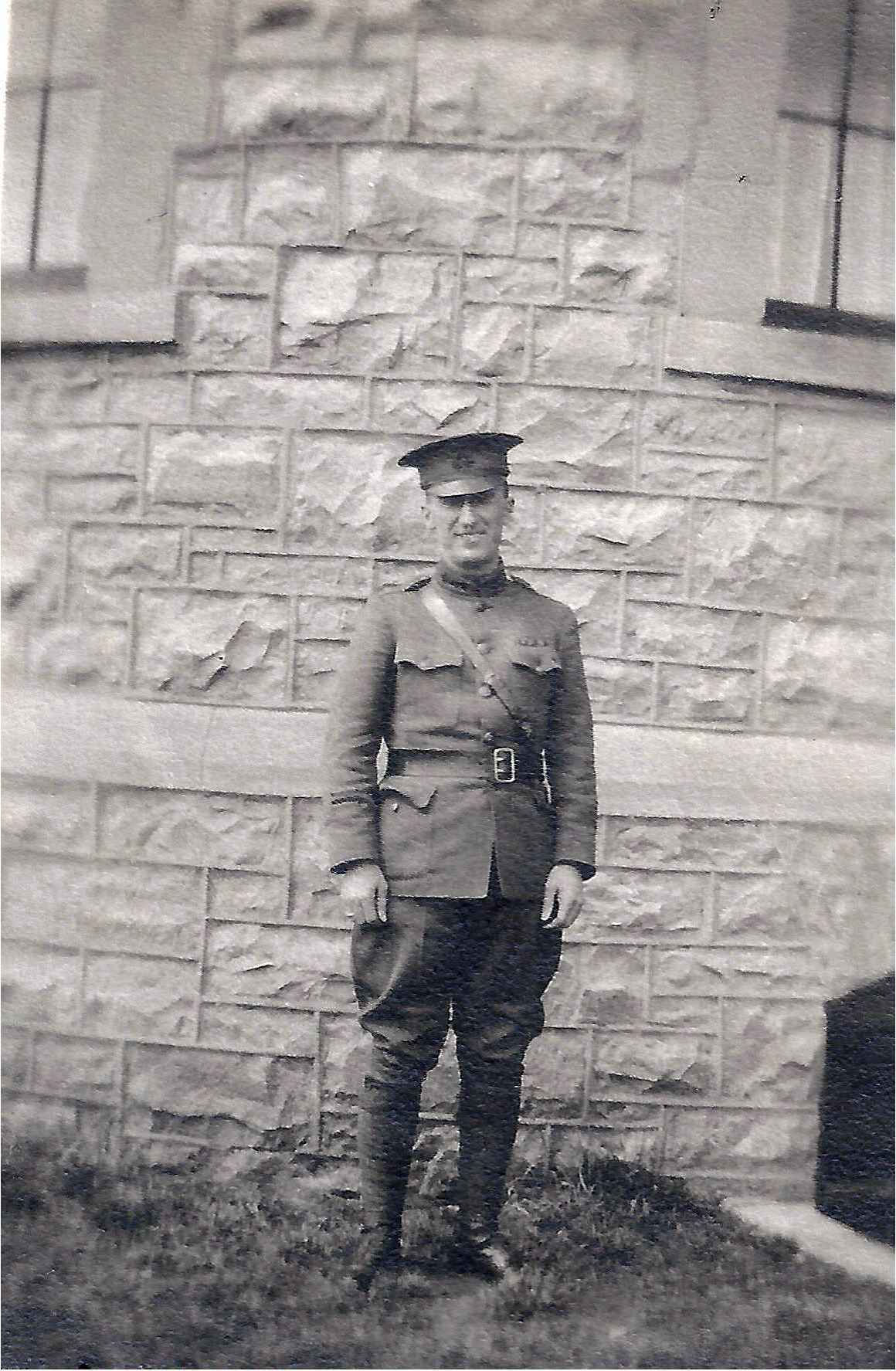
Howard Simpson in his American Red Cross uniform before departing for France in 1918, where he served as a field representative during World War I
Shortly after Simpson became superintendent, South Dakota enacted compulsory attendance laws requiring Deaf school-age children to attend SDSD. Enrollment reached approximately 100 students by 1916. However, World War I brought new challenges. As families faced wartime hardships and labor shortages, enrollment temporarily declined. During the war, Simpson took a leave of absence to serve in France as a field representative for the American Red Cross, while his wife, Stella Simpson, assumed many of the superintendent's administrative responsibilities. The SDSD community also supported the war effort through Red Cross activities, with pupils participating in membership drives and producing comfort pillows, surgical dressings, and other supplies for American servicemen. These efforts reflected the school's commitment to both patriotic service and community involvement.
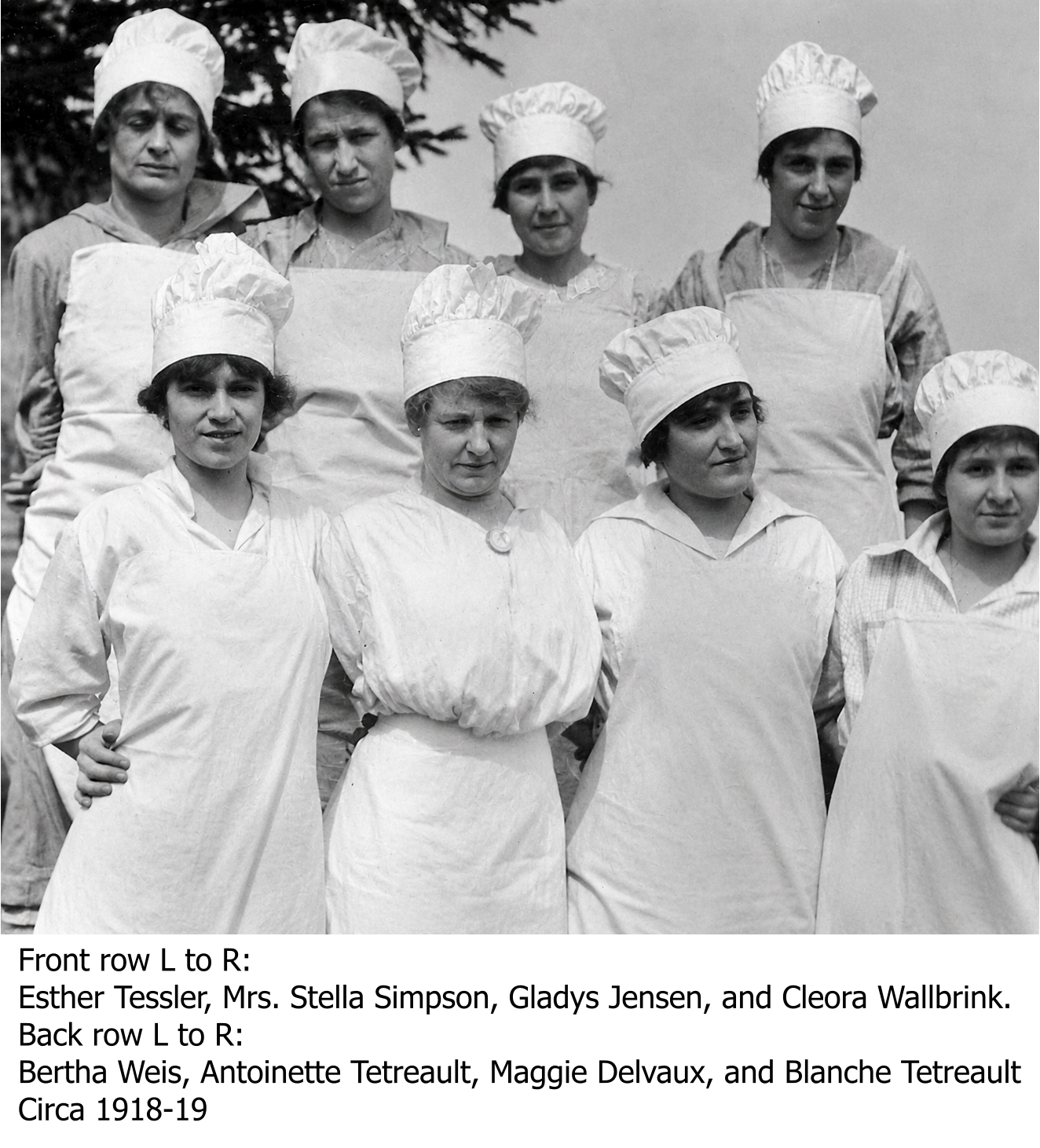
Stella (front row, second from left) assumed many of the superintendent's administrative responsibilities. Her leadership helped ensure the daily operation of the school continued smoothly during Howard's absence.
Transition to a New Career
After returning from France and completing a decade as superintendent, Howard Simpson resigned from SDSD in 1920 to pursue a new career in the hotel business. He first purchased a half-interest in the Park Hotel in Madison, Wisconsin, before later becoming owner and manager of the McClellan Hotel in Wichita, Kansas.
Click each hotel below to learn more about Howard Simpson’s role.
Although his career took him beyond Deaf education, his ten years of leadership had already transformed SDSD through campus expansion, vocational education, and the enlargement of the school farm.
To learn more about Howard Simpson’s life beyond SDSD, click his profile below.
PROFILE
Legacy
Howard Simpson's administration bridged the founding generation of SDSD with the modern institution that emerged in the twentieth century. Building upon the work begun by his father, he expanded the campus, strengthened vocational education, enlarged the school farm, and guided SDSD through a period of national change and growth. His leadership left a lasting mark on the physical and educational development of the school.
References:
The Transcendent Territory, pages 15- 17 View
Debra Bilbrey's research files.
Scott Miller's research files.
Argus Leaders
Multiply newspapers
Wikipedia.
Find A Grave.
More sources to be added soon