


Harry Lee Welty Era
(1920-1925)
Strengthening Education and Campus Life
The Harry L. Welty Era marked a time of steady progress at the South Dakota School for the Deaf. While building upon the strong foundation established by Howard W. Simpson, the school saw little major construction during Welty's five-year administration. Instead, Welty focused on strengthening academic and vocational programs, improving existing campus facilities, increasing enrollment, and enriching student life. His leadership helped shape the school's educational culture while preparing Deaf students for productive and independent lives.
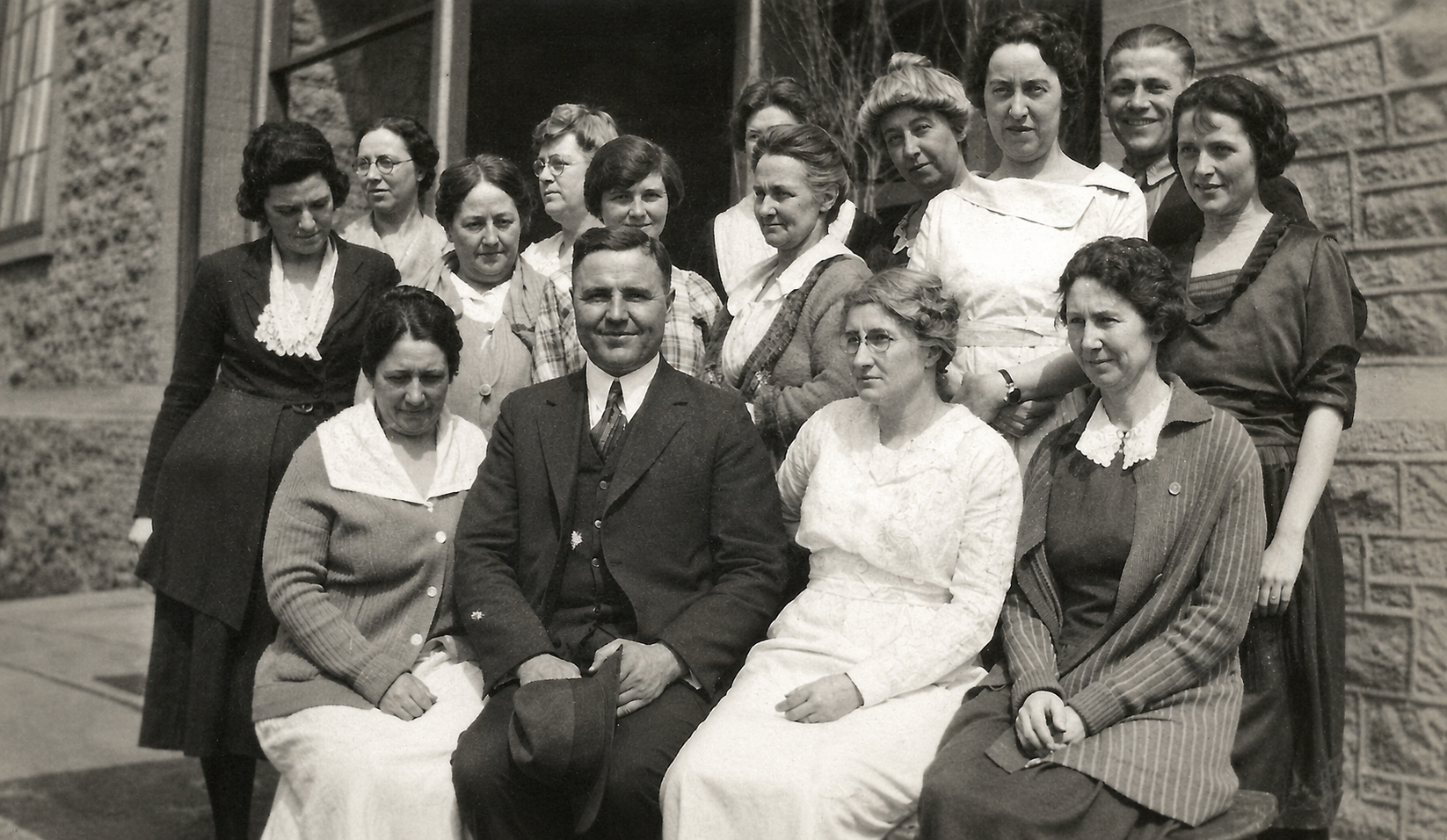
Superintendent Harry L. Welty (center) poses with members of the SDSD Faculty during the early 1920s. The photograph reflects the dedicated educators who helped shape student life during his adminstration.
Educational Development
Introduction
Harry L. Welty became the seventh superintendent of the South Dakota School for the Deaf on January 1, 1920, succeeding Howard W. Simpson. Before accepting the position, he served as principal at the Nebraska School for the Deaf, bringing valuable experience in Deaf education and school administration. During his five years as superintendent, enrollment steadily increased from approximately 80 students in 1920 to nearly 95 students by 1924 while educational programs and campus life continued to expand.
Beliving education should prepare students for employment and independent living, Welty strengthened SDSD's academic and vocational programs.
Major educational improvements included:
Vocational Education
-
Reestablished the printing department.
-
Expanded manual training and woodworking.
-
Improved domestic science instruction.
-
Construction of a coalhouse on campus.
-
Added new printing and vocational equipment.
Specialized Instruction
-
Expanded educational opportunities for deaf-blind students.
-
Continued speech and lip-reading instruction.
-
Increased individualized classroom instruction.
Newspaper reports during Welty's administration also mentioned an oral education program that emphasized speech and lip-reading. Although very few details about the program have been found, it reflected the school's continuing commitment to expanding educational opportunities for Deaf students.
These improvements reflected Welty's belief that Deaf students should graduate with both academic knowledge and practical skills needed for future employment and independent living.

Harry Lee Welty
Click image to read his profile
Born:
-
October 24, 1882
Died:
-
June 21, 1954
Position:
-
7th Superintendent
Years Active:
-
1920 – 1925
Known For:
-
Former Principal of the Nebraska School for the Deaf.
-
Reopened the school's printing department.
-
Supported Hansen's nationally recognized rose research
-
Modernized existing campus buildings.
-
Increased student enrollment.
-
Expanded vocational education and atheletics.
-
Resigned after a 1925 State Board dispute.
Family:
-
Wife: Jane Jennie Esther Jones
-
Children:
-
Elizabeth Lee Welty Mayer
-
Robert L. Welty
-
Arthur Fredrick Welty
-
Campus Maintenance and Modernization
Rather than constructing new buildings, Welty concentrated on maintaining the existing campus. Several improvements to residential and academic facilities enhanced student life and supported the school's educational programs.
Academic & Residential Buildings
• Renovation of teachers' quarters
• Dormitory rooms remodeled for greater student privacy
• Improved portions of the Main Building
• Flooring replaced in portions of the Girls' Dormitory
• Additional bathrooms and plumbing improvements
• Living quarters adapted for deaf-blind students
These improvements enhanced both student life and educational programs while extending the usefulness of the existing campus.
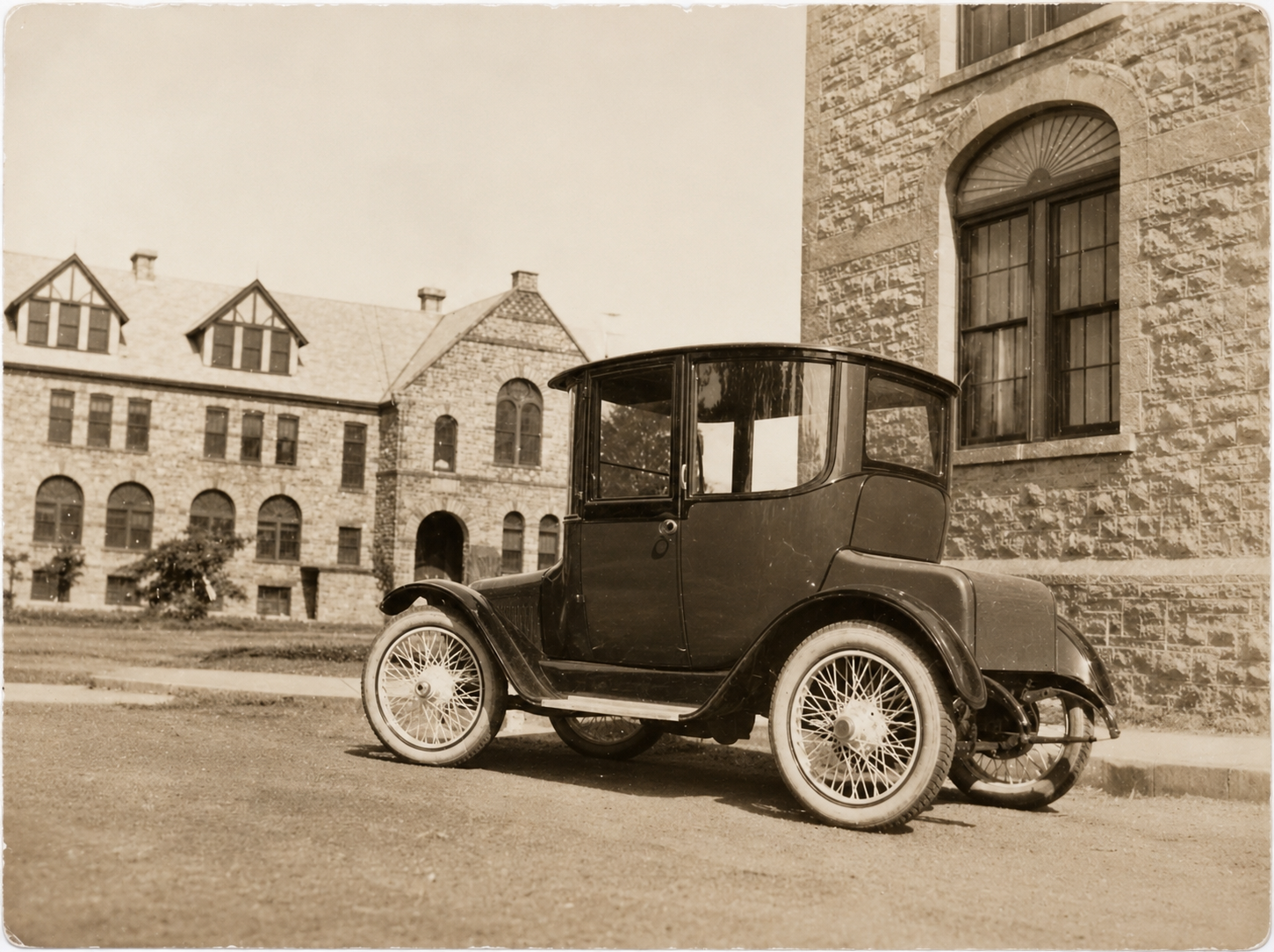
A modern automobile parked beside the Main Building reflects the changing technology of the early 1920s, when Welty focues on maintaining and amodernizing the exisitng campus.
Student Activities and Events
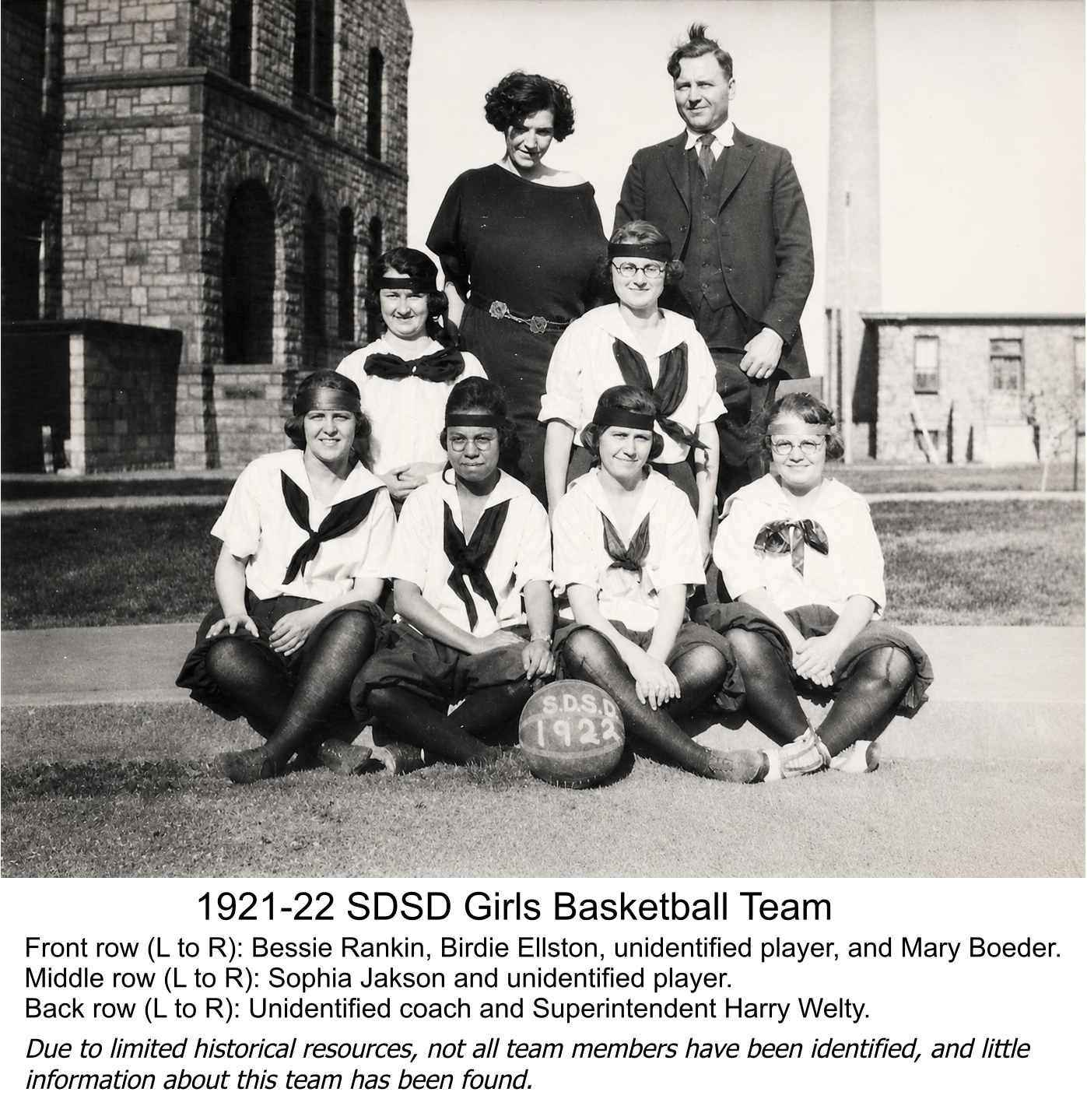
1921-22 SDSD Girls' Basketball team.
Click image to enlarge image.
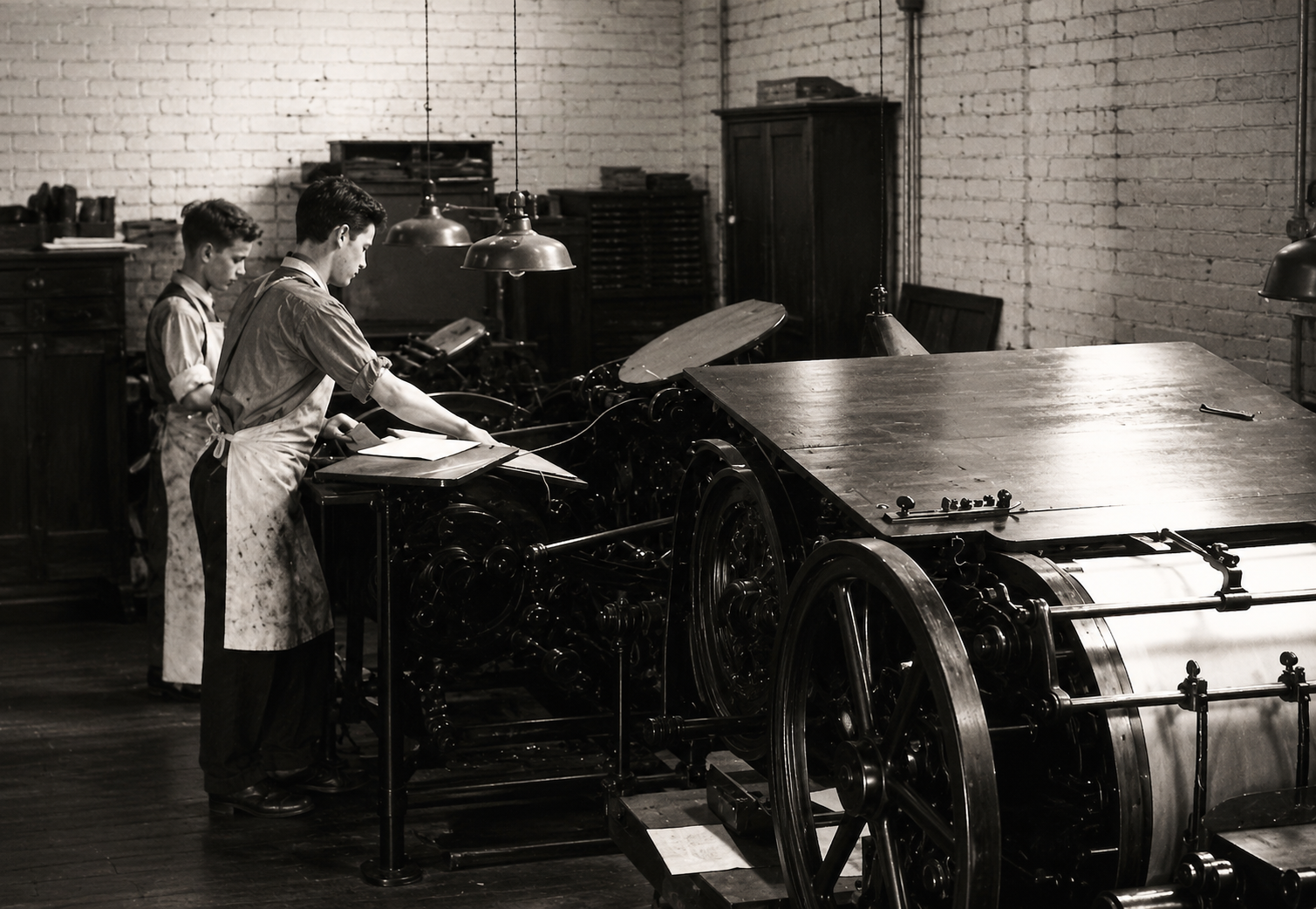
Students learn printing and press operation in SDSD's Vocational printing department, c. 1920s. The department was reestablished during Welty's administration.
Athletics
• Football
• Boys' basketball
• Girls' basketball
• Baseball
• Regional basketball tournaments
Student Activities
• Washington Birthday celebrations
• Christmas programs
• Graduation exercises
• Art exhibitions
• Woodworking competitions
• Educational field trips
• Motion picture outings
• Community gatherings
Community Engagement
• South Dakota Association of the Deaf conventions
• Public demonstrations of student work
• Commencement exhibitions
• Visitors welcomed throughtout the year.
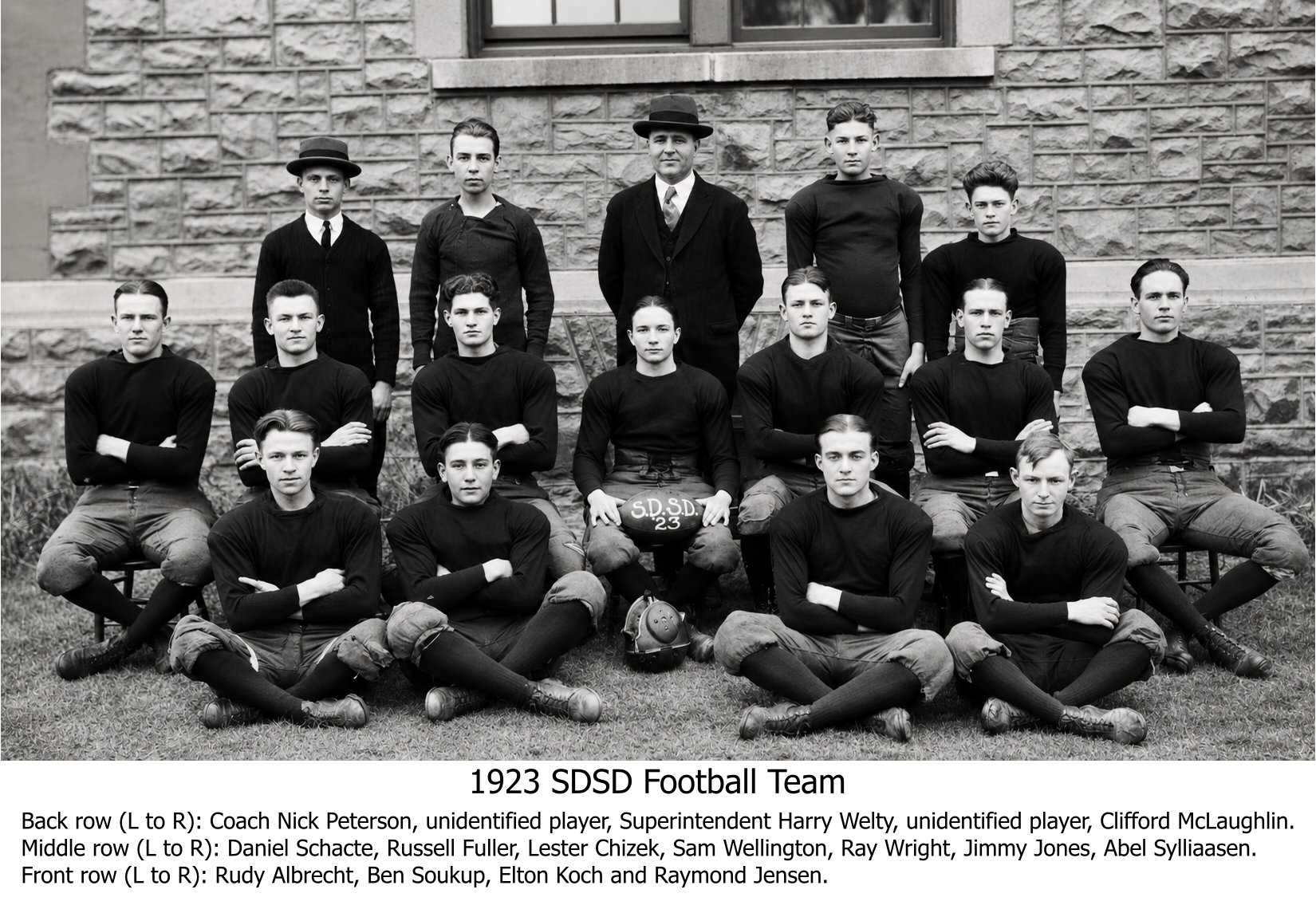
Superintendent Harry L. Welty (center, back row) poses with the SDSD football team during the 19223 season. Click the image to enlarge it.
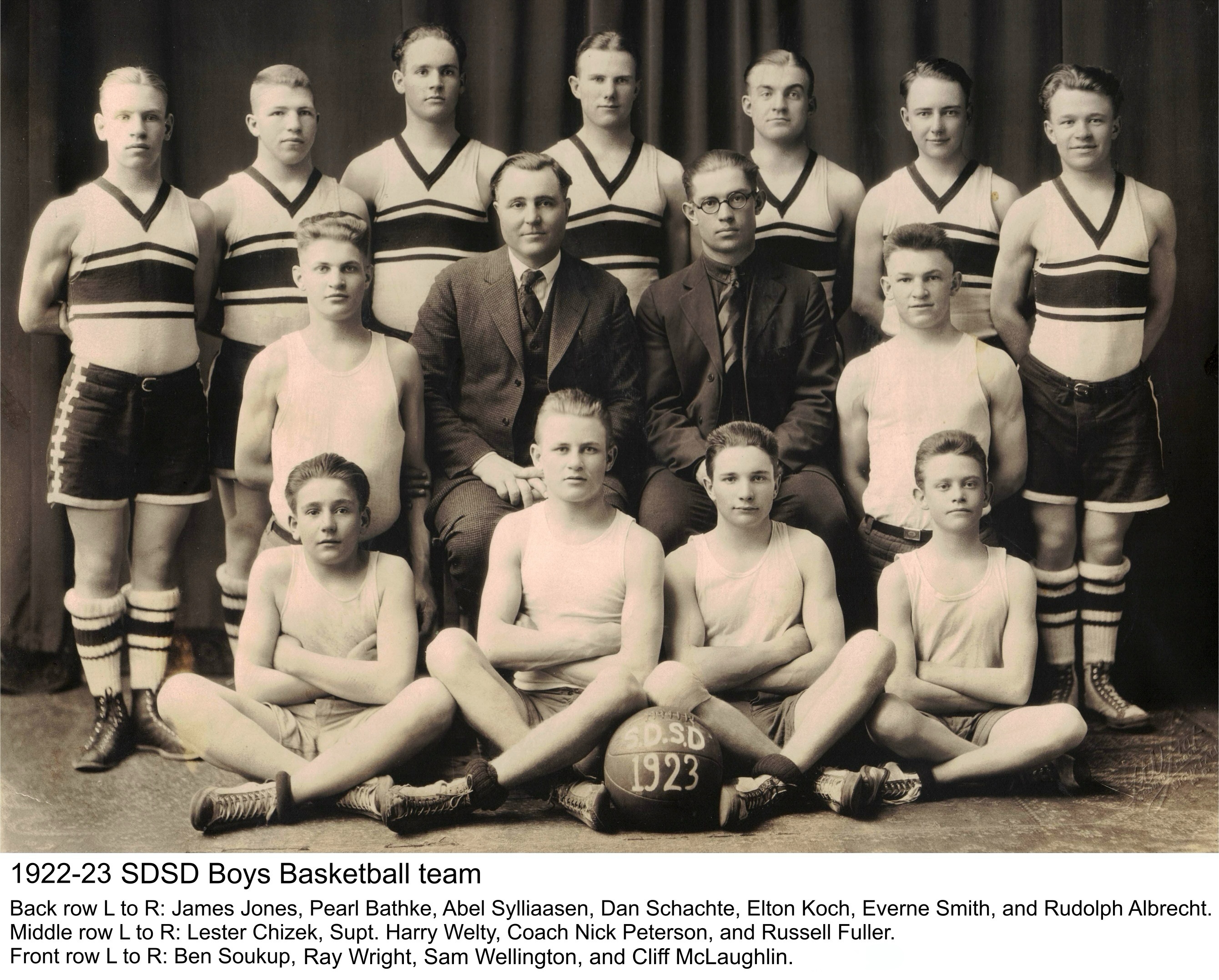
Superintendent Harry Welty sits with the 1922-23 SDSD boys basketball team.
Click the image to enlarge it.
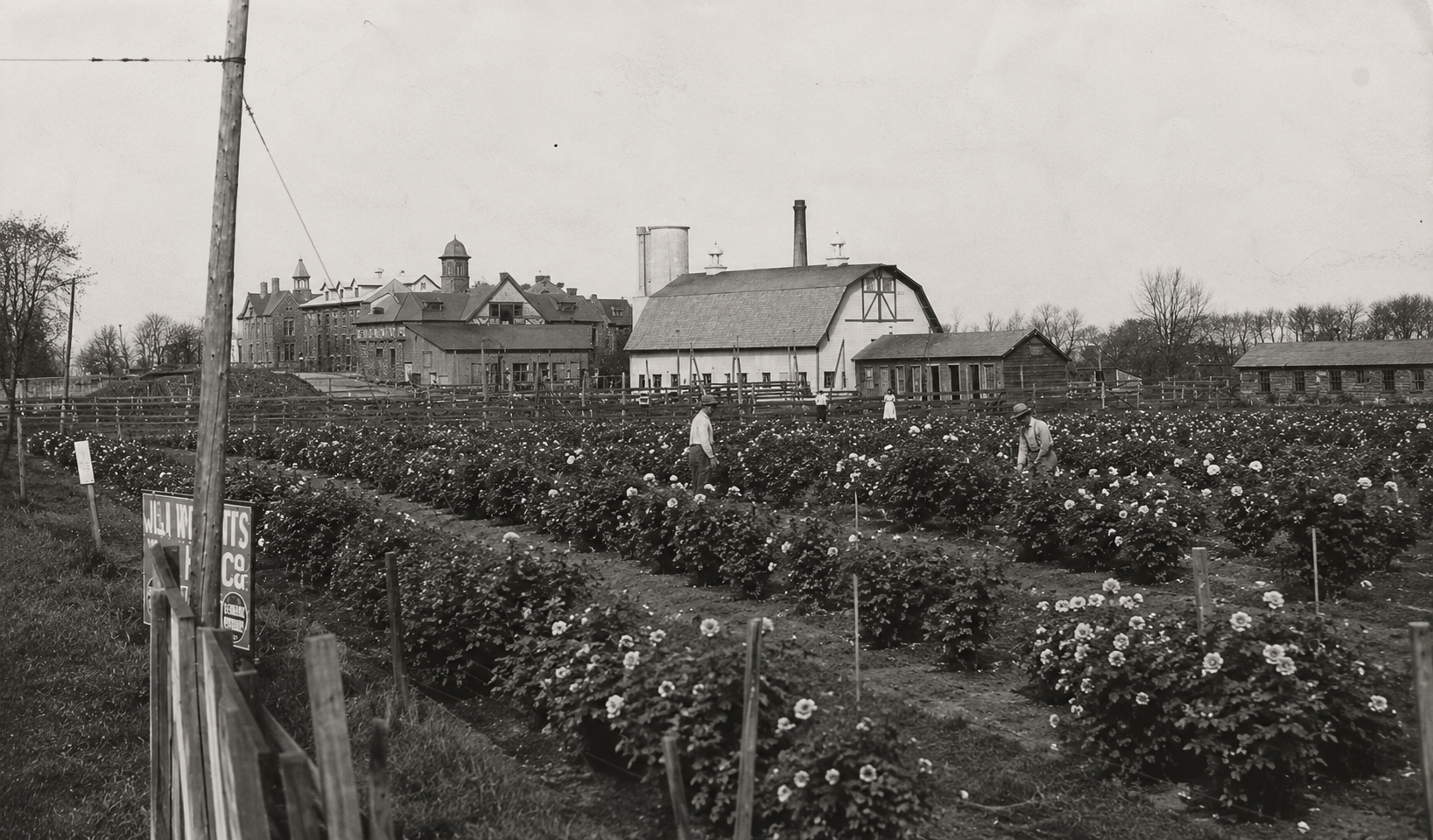
AI-Assisted historical reconstruction of Professor N.E. Hansen's experimental rose research plots on the SDSD farm, circa 1923. Since no known photographs of the gardens have been found, this image was created from historical descriptions to help illustrate the approximate appearance and scale of the nationally recognized horticultural research project.
Agricultural Research
One of the most unique developments during Welty's administration occurred on the school farm.
Beginning in 1923, approximately ten acres of SDSD farmland were assigned to Professor N. E. Hansen of South Dakota State College for experimental horticultural research. Thousands of roses, fruit trees, and other hardy plants were cultivated on the campus, eventually creating one of the nation's most ambitious rose breeding programs. The project brought statewide recognition to SDSD while demonstrating that the campus contributed not only to Deaf education but also to agricultural research.
Legislative Challenges
Welty's administration also experienced several significant challenges.
In 1923, legislation proposed relocating the South Dakota School for the Blind from Gary to the Sioux Falls campus. Educators, alumni, and community leaders opposed the proposal, arguing that Deaf and blind students required different educational methods. The proposal ultimately failed, allowing both schools to remain independent.
During the spring of 1925, a dispute arose between Superintendent Welty and the State Board of Charities and Corrections regarding faculty appointments. The controversy centered on the proposed reappointment of teacher Mrs. O. C. Ellison, daughter of Delos A. Simpson and niece of former superintendent James Simpson. The disagreement became public after eleven faculty members announced they would resign if Welty left the school, demonstrating their confidence in his leadership.
Although the Board announced that it had accepted his resignation, Welty publicly disputed the Board's account, declaring, "I did not hand in my resignation. I was fired."
The disagreement brought an end to his five-year administration and marked one of the most publicized leadership transitions in SDSD history.
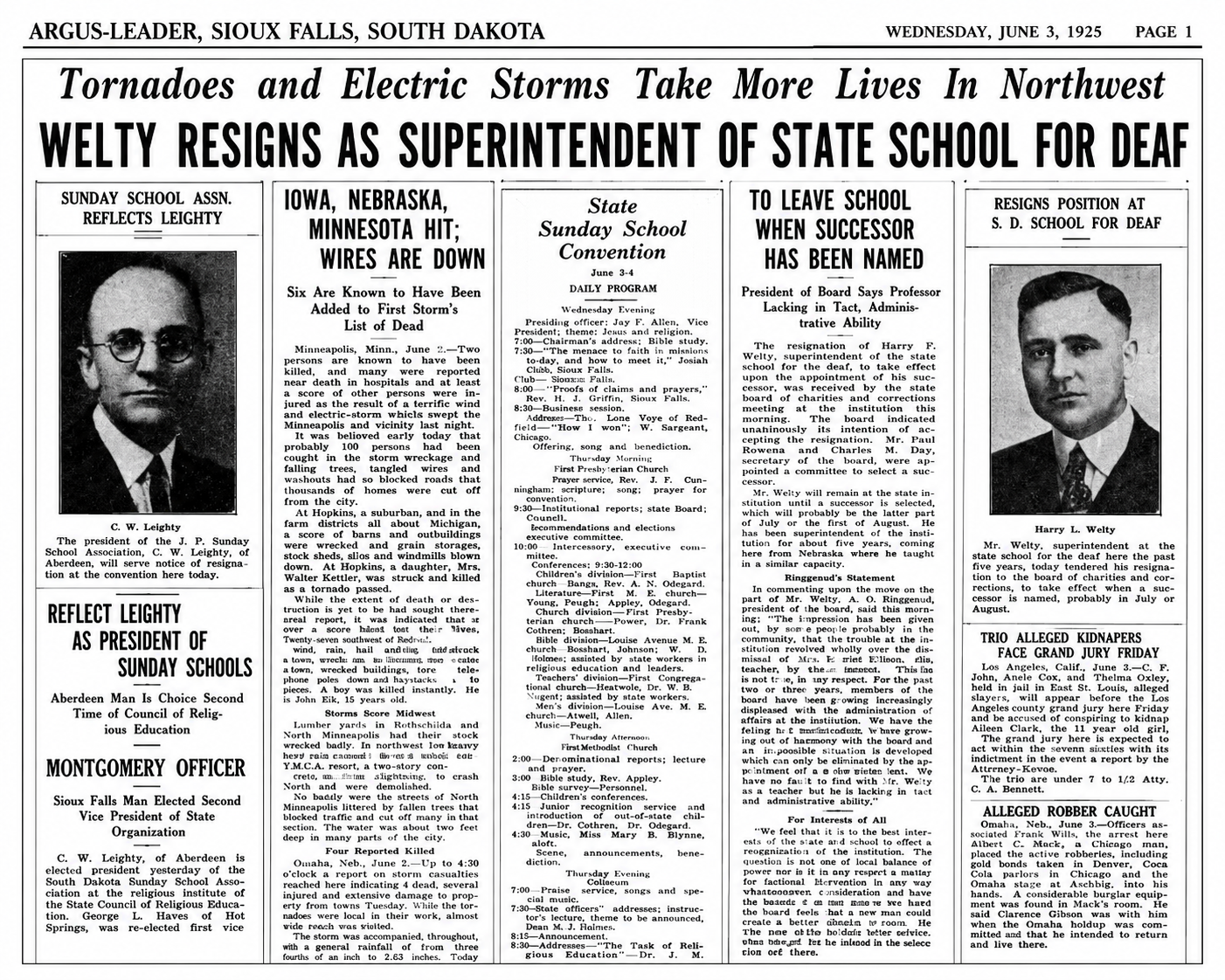
Newspaper coverage of Harry L. Welty's resignation in 1925.
Click image to view the complete article.
Transition to a New Career
Following his departure from SDSD in July 1925, Harry Welty accepted a teaching position at the Coloado School for the Deaf and Blind in Colorado Springs, CO returning to classroom instruction after servin five years as superintendent.
To lear more about Harry Welty's life before and after SDSD, click his PROFILE.
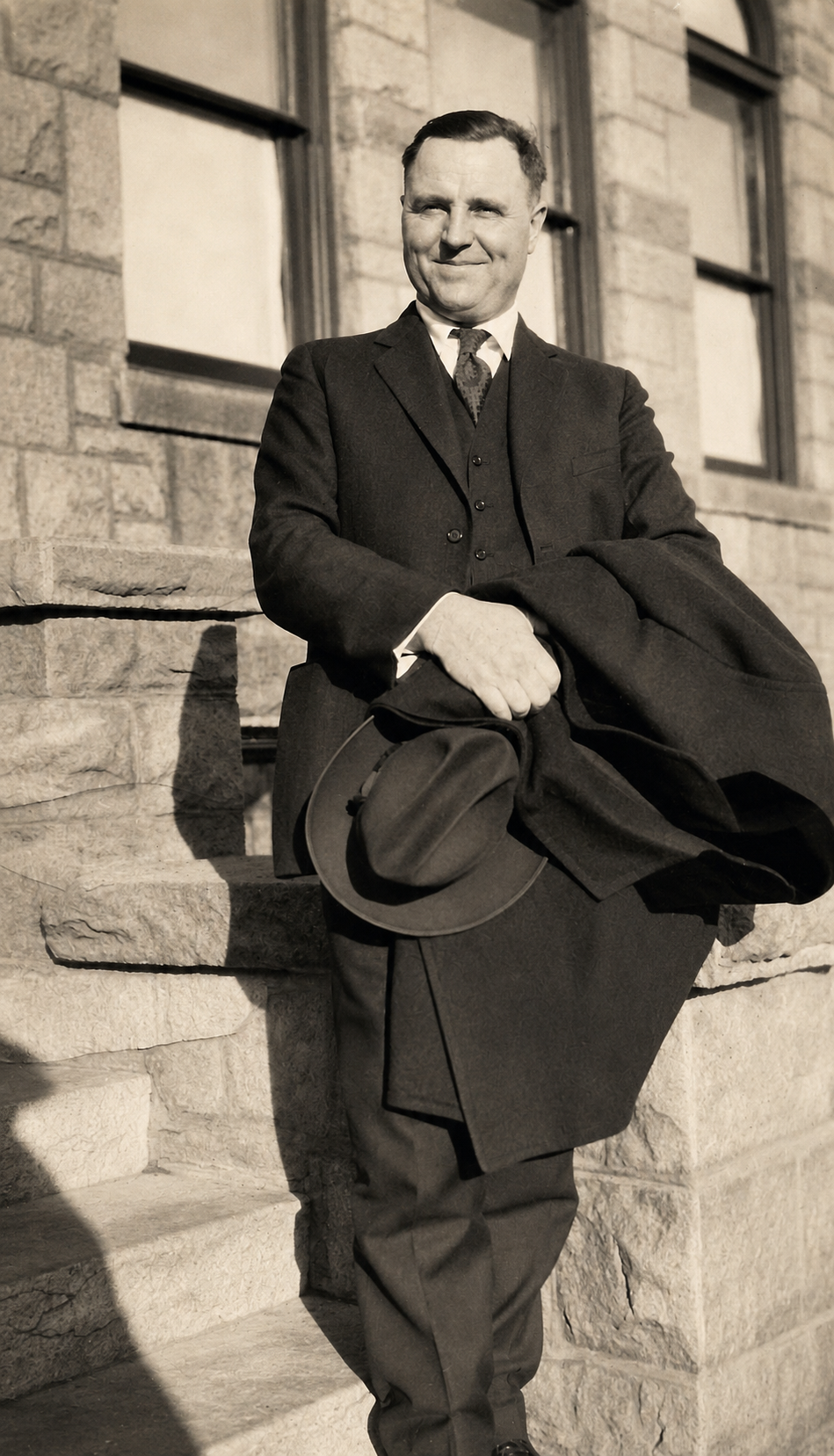
Superintedent Harry L. Welty, early 1920s, during his tenure as the seventh superintedent of the SDSD.
Legacy
Harry L. Welty's administration strengthened the educational culture of the South Dakota School for the Deaf. While little new construction occurred during his tenure, he expanded vocational education, modernized existing facilities, increased enrollment, enriched student life, promoted specialized instruction, and supported nationally recognized agricultural research on the school farm. Building upon the physical foundation established by Howard W. Simpson, Welty helped prepare SDSD for continued education growth during the decades that followed.
References:
The Transcendent Territory, page 15 - View
Debra Bilbrey's research files.
Scott Miller's research files.
Argus Leaders
Multiply newspapers
Wikipedia.
Find A Grave.
More sources to be added soon